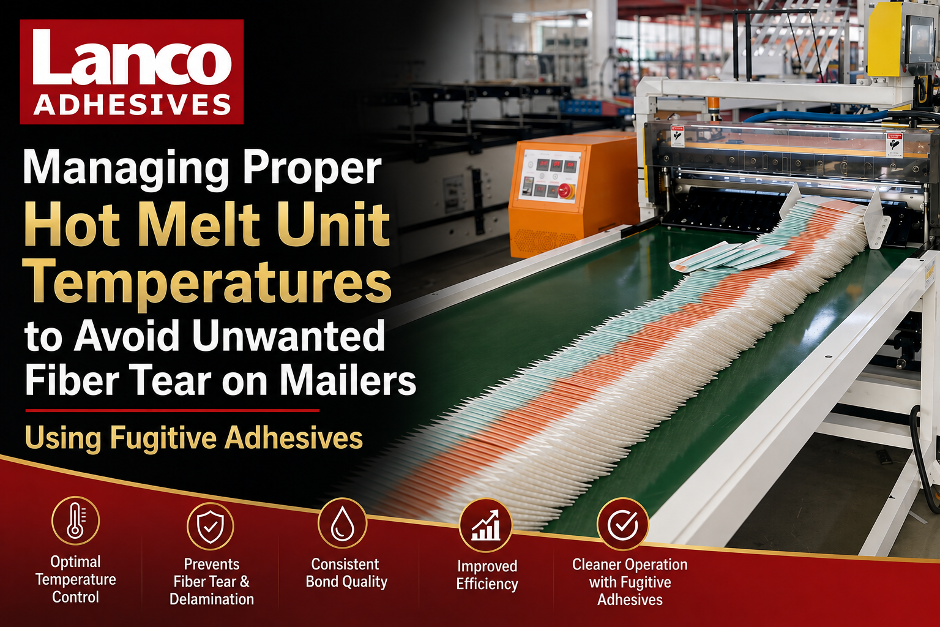
Overcoming Challenges with Fugitive Adhesives: Tackling Staining Issues in Credit Card and Promotional Mailers

Fugitive adhesives play a critical role in the production of credit card mailers, promotional inserts, and direct mail campaigns. Designed to provide temporary bonding, these adhesives allow items like cards, coupons, or reply forms to stay securely in place during mailing yet release cleanly when the recipient removes them. While fugitive adhesives offer undeniable convenience, one persistent challenge continues to concern mailers and converters alike: staining and visible residue.
Understanding why staining occurs and how to prevent it is essential for maintaining brand integrity, ensuring postal compliance, and delivering a positive customer experience.
What Are Fugitive Adhesives and Why Are They Used?
Fugitive adhesives are pressure-sensitive, water-based adhesives formulated for temporary adhesion. Unlike permanent adhesives, they are designed to dry to a tacky state and release without tearing paper or damaging substrates.
They are commonly used in:
Credit card mailers
Insurance and banking correspondence
Promotional mailers and coupons
Reply cards and inserts
Their popularity stems from their clean release, compatibility with high-speed equipment, and ability to hold items securely during transit. However, when improperly selected or applied, fugitive adhesives can cause unsightly staining or ghosting, which undermines the final presentation.
Why Staining Happens in Credit Card and Promotional Mailers
Staining issues typically occur due to a combination of adhesive formulation, substrate interaction, and environmental conditions. Some of the most common causes include:
1. Paper Porosity and Coating
Uncoated or highly porous papers tend to absorb moisture from water-based adhesives. This absorption can lead to darkened spots, halos, or visible adhesive patterns once the adhesive dries.
Conversely, certain coated papers can react chemically with the adhesive, resulting in discoloration over time, especially in mailers that sit in warehouses or postal facilities for extended periods.
2. Over-Application of Adhesive
Applying too much fugitive adhesive increases moisture exposure and raises the risk of bleed-through. Excess adhesive can migrate into paper fibers or spread beyond the intended bond area, leaving visible marks.
3. Improper Drying Conditions
High humidity, low airflow, or insufficient drying time can prevent fugitive adhesives from setting correctly. When adhesives remain wet for too long, staining becomes more likely, especially during stacking or bundling.
4. Adhesive Formulation Mismatch
Not all fugitive adhesives are created equal. Some formulations are better suited for lightweight promotional papers, while others are engineered for heavier card stocks or plastic substrates. Using a general-purpose adhesive instead of a mailer-specific formulation often leads to performance issues.
The Impact of Staining on Mail Campaigns
While staining may seem like a minor cosmetic issue, its consequences can be significant:
Brand perception suffers when mailers appear unprofessional or damaged
Regulatory concerns arise in financial mailings where clarity and presentation are critical
Customer trust erodes, particularly in credit card mailers where visual quality influences credibility
Increased waste and reprints drive up production costs
For industries like banking, insurance, and retail promotions, even small defects can translate into lost confidence and reduced response rates.
Best Practices to Prevent Staining Issues
Addressing fugitive adhesive staining requires a proactive, informed approach. Here are several best practices that can significantly reduce risk:
Optimize Adhesive Selection
Choose a fugitive adhesive specifically formulated for paper-to-paper or paper-to-plastic mail applications. Low-moisture, low-solids formulations are often more effective at minimizing absorption and discoloration.
Conduct Substrate Testing
Before full-scale production, test the adhesive on the exact paper stock being used. Evaluate not only immediate appearance but also how the mailer looks after 24–72 hours under varying temperature and humidity conditions.
Control Application Volume
Precision matters. Calibrate application equipment to apply the minimum amount of adhesive needed for secure bonding. Smaller glue dots or thinner patterns often perform just as well with far less risk of staining.
Monitor Environmental Conditions
Maintain consistent temperature and humidity levels on the production floor. Proper airflow and adequate drying time are critical to ensure adhesives set cleanly and evenly.
Partner with Adhesive Experts
Working with an adhesive supplier who understands mailing applications can make all the difference. Expert guidance helps ensure the adhesive formulation aligns with your substrates, equipment, and production speed.
The Role of Advanced Adhesive Technology
Modern fugitive adhesives have evolved significantly, with improved formulations designed to combat staining, ghosting, and residue issues. Advances in polymer chemistry allow manufacturers to create adhesives that offer strong temporary bonds while remaining visually invisible, even on sensitive or uncoated papers.
By leveraging these innovations, mailers can achieve higher production efficiency without compromising appearance or quality.
Conclusion: Clean Performance Starts with the Right Adhesive
Staining issues in credit card and promotional mailers are not inevitable. With the right fugitive adhesive, proper application techniques, and attention to environmental factors, manufacturers can deliver clean, professional mail pieces that reflect positively on their brand and clients.
Temporary adhesion should never leave a permanent impression for the wrong reasons.
Ready to Eliminate Staining Issues in Your Mailers?
Lanco Adhesives offers a comprehensive range of high-performance fugitive adhesives engineered specifically for credit card mailers, promotional inserts, and direct mail applications. Our expert team works closely with manufacturers to deliver solutions that provide reliable hold, clean release, and superior visual results. Contact us to learn more or speak with an adhesive specialist.